
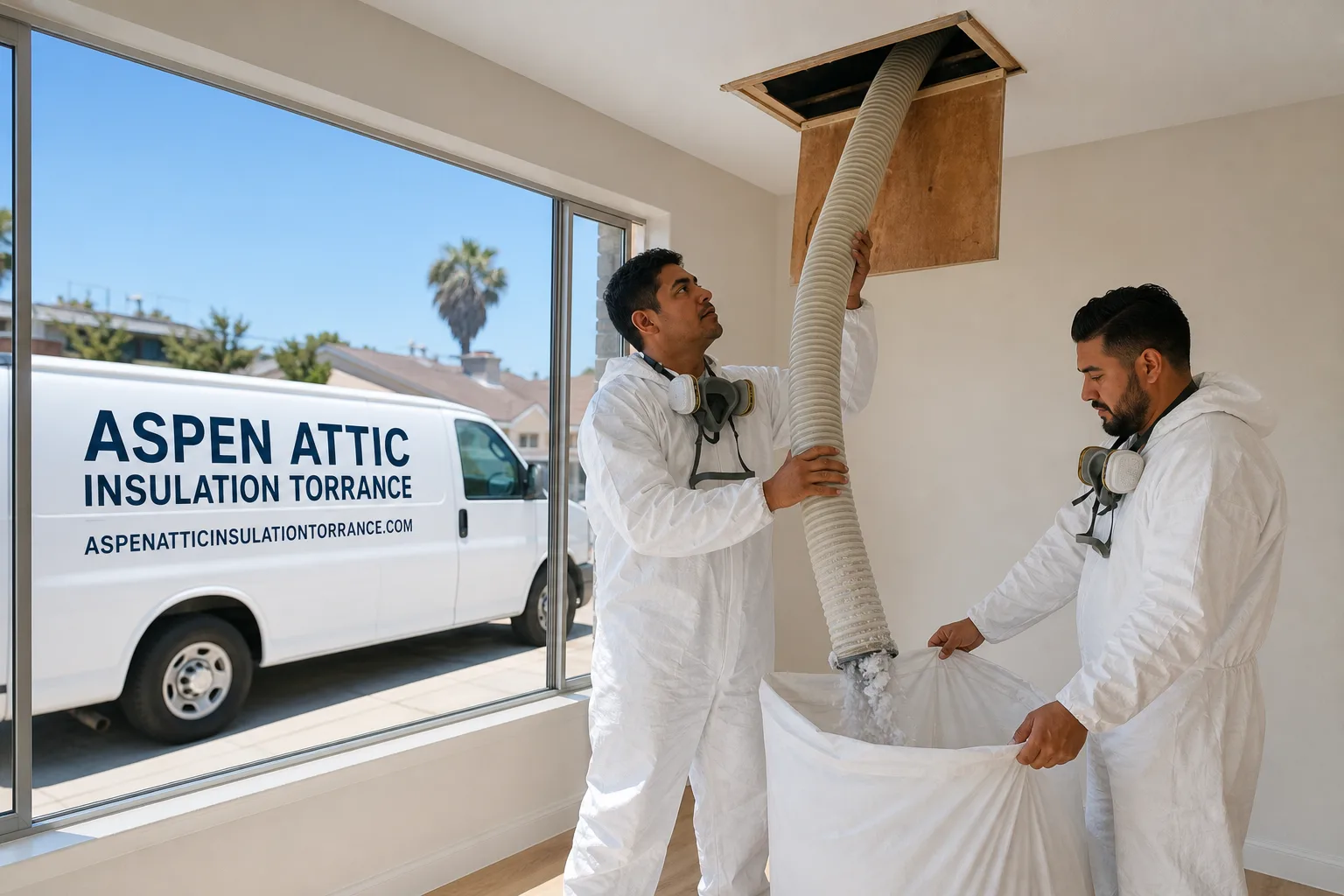
Fast, Reliable Blown In Insulation Across Rolling Hills Estates
Blown-in insulation in Rolling Hills Estates typically runs $2,100 to $5,400 for a full attic on a 2,500 to 3,500 square foot hillside home, depending on material choice and whether we’re dense-packing vaulted ceilings or cantilevered overhangs. Most jobs finish in a single day. We coordinate dispatch from our Los Angeles office, and our crews serve Rolling Hills Estates locally, so scheduling is straightforward.
We know Rolling Hills Estates homes are different from what you’ll find down the hill. Custom post-and-beam framing, flat or low-slope roofs, and expansive glass walls change how insulation needs to be installed. A generic blow-and-go approach leaves gaps. We address the specific failure points in your home, from cantilevered deck joists pulling damp ocean air to vaulted ceiling cavities where old fiberglass has compressed into useless mats. If you’re ready to talk through your project, call us at (424) 306-0725.
Why Aspen Attic Insulation Torrance Is Rolling Hills Estates’s Preferred Blown In Insulation Company
Homeowners in Rolling Hills Estates choose us because we prove who is showing up before anyone knocks. Every technician is background-checked, identity-verified, and arrives in a marked uniform with a photo ID badge. We send the tech’s name and photo to you before the visit. If anyone else arrives, the visit is free and we make it right. That’s the Threshold Standard, the verification and conduct protocol every Aspen location operates under, and it matters when you’re letting someone into a home on a quiet hillside street.
Our pricing follows the same philosophy. You get a written price before any work starts. No post-job surprises, no vague estimates that climb after the crew arrives. That written quote covers the materials, the labor, and the scope. It’s the same document Garrett Sloane signs off on for every job.
We also back the work with our 365-Day Done Right Promise. If the insulation isn’t done right, we return and make it right, free of charge, within a full year. It’s written, it covers labor and materials, and it applies to everything we install in Rolling Hills Estates homes. If a repair fails, the second visit costs you nothing.
Cellulose Insulation in Rolling Hills Estates
Cellulose insulation is a dense, fire-retardant-treated paper fiber product we blow into attic floors, wall cavities, and hard-to-reach areas of Rolling Hills Estates homes. It works well on the Peninsula because it packs tightly enough to slow air movement, which is the real enemy here more than extreme heat or cold. A typical attic cellulose blow-in for a Rolling Hills Estates home runs $2,300 to $4,800, with the higher end covering vaulted ceiling cavities and cantilevered deck joist bays that require more labor to access. The job involves running a hose into the attic or wall cavity, dense-packing the material to the specified R-value, and sealing access points before we leave.
Dense-packing for coastal air leaks
The marine layer never fully leaves the Palos Verdes Peninsula. In Rolling Hills Estates, moist Pacific air gets pulled into insulation cavities through gaps in cantilevered overhangs and around post-and-beam connections. Cellulose dense-packed at 3.5 pounds per cubic foot or higher cuts that air movement dramatically. We’ve pulled compressed fiberglass batts out of Rolling Hills Estates ceilings that were doing almost nothing because air was moving right through them. Cellulose fills the cavity completely and rests tightly against the framing, leaving no channels for damp air to follow.
Recessed light and framing considerations
Custom hillside homes often have recessed fixtures and irregular post-and-beam framing that leave odd cavities around electrical work. Cellulose conforms to those shapes better than batts or rigid boards. We check every fixture housing for proper clearance and use covers where needed so the insulation doesn’t block airflow around lights that generate heat. That detail matters in older Rolling Hills Estates builds where fixture spacing wasn’t planned for modern insulation depth.
Blown In Attic Insulation in Rolling Hills Estates
Blown in attic insulation covers the attic floor or roof deck with loose fibers, creating a continuous thermal layer that stops heat transfer and air leaks. In Rolling Hills Estates, this typically costs $2,100 to $5,400 for a full attic, with the scope depending on whether the home has a ventilated attic, a vaulted ceiling assembly, or a flat roof with limited access. We use Owens Corning AttiCat blown-in fiberglass and Johns Manville products in most Rolling Hills Estates attics because they deliver consistent R-value without settling the way older materials do. The process takes most of a day, including prep, blowing, and cleanup.
Flat and low-slope roof challenges
Many Rolling Hills Estates homes built from the 1960s onward have flat or very low-slope roofs with shallow attic spaces. Those attics often lack proper ventilation, and what ventilation exists can pull in the wet marine fog that sits over the Peninsula in the morning. We inspect the roof deck condition and existing venting before we blow anything in. Trapping moisture against the underside of the sheathing is how mold starts. If the attic needs additional baffles or vent adjustments, we address that before the insulation goes in.
Vaulted ceiling retrofits without a remodel
Post-and-beam construction means the ceiling often follows the roofline, leaving a cavity between the finished ceiling and the roof deck. Homeowners don’t want to tear out ceilings to fix insulation. We can access many of those cavities from the exterior or through existing access points, then dense-pack the space with blown-in material. We recently dense-packed the vaulted ceiling over a post-and-beam great room in Rolling Hills Estates, where the original fiberglass batts had compressed into thin mats. Using Owens Corning AttiCat blown-in fiberglass, we filled every cavity and sealed the cantilevered deck joists, and the homeowner reported the marine layer draft was gone within a day.
Trusted Brands We Service in Rolling Hills Estates
We stock and install materials from Owens Corning, Johns Manville, Knauf, and Rockwool, matched to the specific job rather than whatever is sitting on the truck. For Rolling Hills Estates homes, we lean on Owens Corning AttiCat fiberglass for attic floors and Rockwool where fire resistance and sound control matter on hillside builds with close property lines. Because we carry multiple brands, we can match the right product to a home with extensive glazing, a flat roof, or an unvented attic without trying to force one material to do everything. If you already have a preferred material or need to match existing insulation, tell us when you call and we’ll make sure the quote reflects it.
Common Blown In Insulation Problems We See in Rolling Hills Estates Homes
- Cantilevered overhangs with no air barrier: Blown-in insulation in cantilevered decks is often installed without a proper air barrier, allowing moist Pacific air to be drawn through the insulation and condense on the underside of the sheathing. Over time that leads to damp insulation, musty smells, and eventually rot in the framing.
- Flat-roof attics trapping marine fog moisture: On hillside homes with flat or low-slope roofs, contractors sometimes blow insulation into attic spaces that lack adequate ventilation. The frequent marine fog sitting over Rolling Hills Estates gets trapped, and the moisture condenses on the underside of the roof deck, creating mold conditions.
- Compressed original fiberglass in vaulted ceilings: Decades of settling, gravity, and the Peninsula’s consistent dampness compress fiberglass batts into thin mats that lose most of their R-value. We find this constantly in 1970s and 1980s Rolling Hills Estates builds, especially in vaulted ceilings where replacement access is difficult without the right equipment.
- Overpacked insulation around recessed lights: In custom post-and-beam homes with extensive glazing, blown-in insulation is sometimes packed too densely around recessed light fixtures. That blocks required airflow and causes fixtures to overheat. We check every can light before and after blowing, and install protective covers where needed.
Pricing for Blown In Insulation in Rolling Hills Estates, CA
Here’s what you can expect to pay for blown-in insulation work in Rolling Hills Estates:
- Attic floor blow-in, standard ventilated attic (2,000-2,800 sq ft home): $2,100 – $3,200
- Whole-attic blow-in with air sealing, larger custom home (3,000-4,000 sq ft): $3,500 – $5,400
- Vaulted ceiling dense-pack retrofit, per room or bay area: $800 – $2,200 depending on access
- Cantilevered overhang joist bay dense-packing and air sealing: $600 – $1,800 per deck area
- Cellulose attic blow-in with moisture-resistant treatment: $2,300 – $4,800
These ranges reflect what Rolling Hills Estates homes demand: custom access, careful handling around post-and-beam framing, and attention to coastal moisture. Your written quote covers the full scope so you know the number before we touch anything. Call (424) 306-0725 for a free estimate. A live person answers, 24/7.
We Also Serve Cities Near Rolling Hills Estates
Our crews work throughout the Palos Verdes Peninsula and the nearby South Bay cities. That includes Torrance, Westchester, Wilmington, and Carson. If you’re just across the city line, we can schedule the same team that handles Blown In Insulation for Rolling Hills Estates homes. Most nearby jobs are scheduled within the same week.
Serving Rolling Hills Estates, CA - Our Local Coverage Area
We’re based in the Rolling Hills Estates area and know this community well. Use the map below to see our service coverage - if you’re nearby, we can almost certainly help.
FAQs About Blown In Insulation in Rolling Hills Estates
Blown-in insulation itself doesn’t affect light pollution, but the dense-packed method works well in the tight, irregular cavities common to hillside construction, which means fewer exterior penetrations and less disruption to the roofline. The Dark Skies ordinance in Rolling Hills Estates restricts outdoor lighting fixtures, and many homeowners pair insulation work with lighting upgrades that require roof or eave access. A clean insulation job keeps those areas accessible without forcing new holes in the building envelope. Call (424) 306-0725 if you’re planning work that needs to meet city requirements, and we’ll talk through the insulation side.
Yes, in most cases. We access the ceiling cavity through existing openings, exterior soffits, or small access points we create and then patch. The material is dense-packed into the cavity to the required R-value. This avoids tearing out the finished ceiling. We’ve done this on many post-and-beam rooms across Rolling Hills Estates, including a recent great room vaulted ceiling where the original batts had compressed to a fraction of their intended thickness. Contact us at (424) 306-0725 and we’ll tell you if your ceiling has viable access.
Because the cantilevered section extends beyond the heated envelope of the house, and the floor or ceiling cavity inside that overhang is directly connected to outside air. The attic insulation does nothing for air moving through the joist bays under your feet or above your head. We dense-pack those bays and install an air barrier to stop the Pacific moisture from being drawn into the house. It’s one of the most common fixes we perform in Rolling Hills Estates, especially on homes built into the hillside where the deck overhang catches the prevailing breeze.
We inspect the attic ventilation and the roof deck condition before blowing anything in. If the space lacks adequate airflow, we install baffles or adjust the venting so the frequent marine fog doesn’t become trapped moisture. Then we use blown-in material appropriate for the humidity conditions. Skipping that step is how mold starts on the underside of the roof deck. We’ve corrected several Rolling Hills Estates flat-roof attics where a previous contractor blew insulation into an unvented space and left the homeowner with a damp mess. Call (424) 306-0725 to have yours checked before any work is quoted.
For most Rolling Hills Estates homes with large window walls and coastal air, we recommend Owens Corning AttiCat blown-in fiberglass for attic floors and dense-packed cellulose for vaulted ceilings and cantilevered cavities. The fiberglass delivers steady R-value without settling over time, and the cellulose packs tightly enough to cut the air movement that causes drafts near all that glass. Rockwool is a strong choice where sound control and fire resistance matter. The right answer depends on your home’s framing and roof type, and we’ll specify the exact material in your written quote.
If you’re ready to solve the drafts, damp spots, or high energy bills in your Rolling Hills Estates home, call Aspen Attic Insulation Torrance at (424) 306-0725. Tell us about your house, and we’ll give you a written price and the name of the technician who will show up. Estimates are free, and the phone is answered by a real person, any hour.
Written by Garrett Sloane, Owner at Aspen Attic Insulation Torrance, serving Rolling Hills Estates through the Threshold Group family of local insulation specialists.