
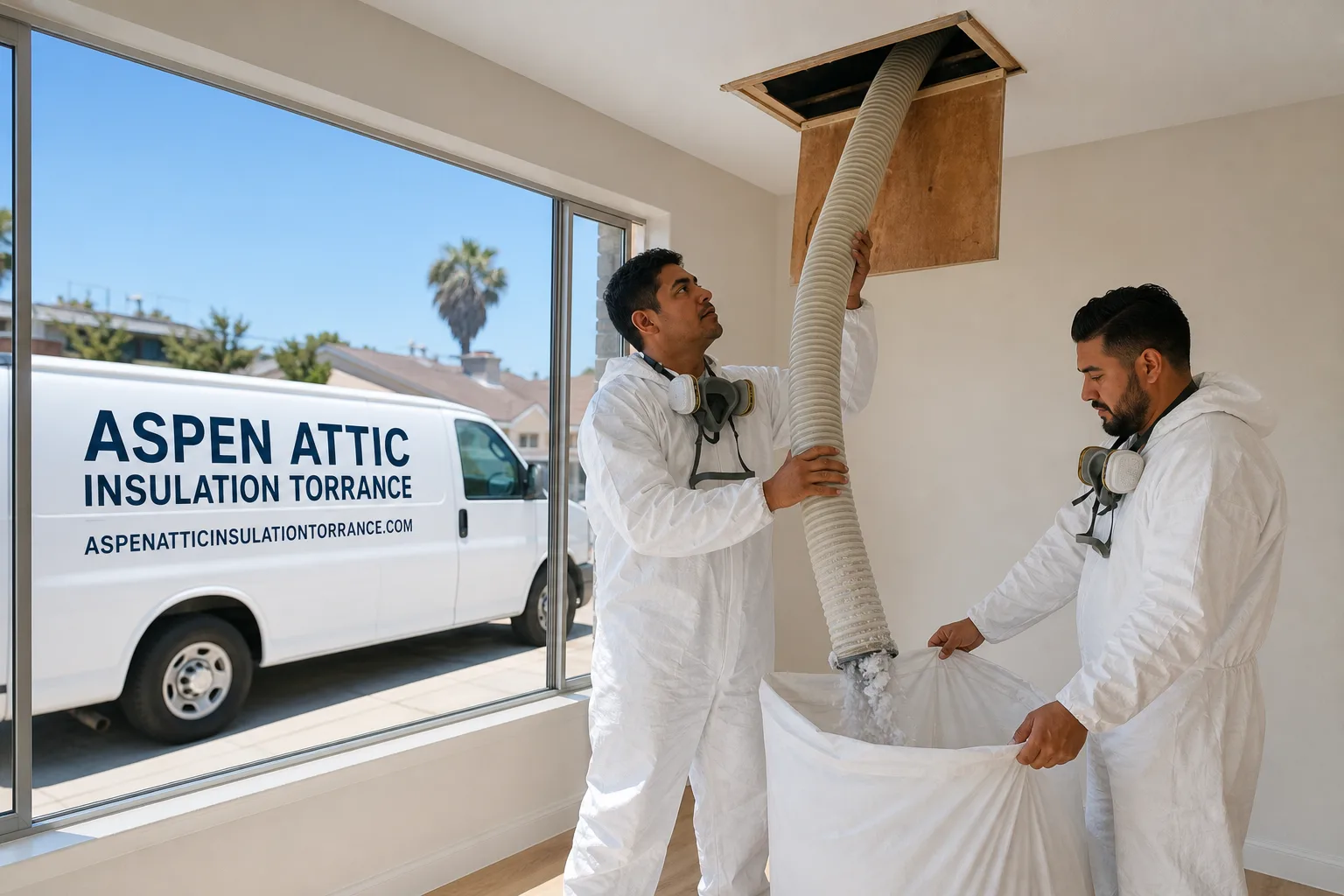
Fast, Reliable Attic Insulation Across Rolling Hills Estates
Attic insulation in Rolling Hills Estates works differently than it does almost anywhere else in Los Angeles County. You’re not fighting extreme heat or bitter cold here. You’re fighting the marine layer, salt air, and a hillside microclimate where moisture moves through attics in ways most contractors never see. A standard blown-in job that works fine in Torrance can fail inside two years up here if the air sealing isn’t right. We know because we’ve fixed enough of them. If you’re noticing cold spots, mold smells near the ceiling, or heating bills that don’t match your home’s size, call (424) 306-0725. We’ll send a technician who knows exactly which failure modes to look for in Rolling Hills Estates before anyone quotes you a number.
Why Aspen Attic Insulation Torrance Is Rolling Hills Estates’s Preferred Attic Insulation Company
Most of the homes we work on in Rolling Hills Estates are custom builds from the 1950s through the 1980s. Post-and-beam framing, flat or low-slope roofs, and lots of glass. That combination creates attic spaces with very little depth and a lot of edge. We’ve been called in after other companies finished a job and the mold came back, because those crews insulated without sealing the penetrations first. That doesn’t happen with our Attic Insulation team. Before we put a single batt or bag of blown fiber into your attic, we map every recessed light, vent, and wire chase. In Rolling Hills Estates that matters more than most places, because those are the exact pathways marine layer fog uses to get inside.
Garrett Sloane set the standard we work under. Every technician who rolls up to your driveway is background-checked, identity-verified, and photo-badged. You get the name and photo before we arrive. If the person at your door isn’t the person in the photo, the visit is free and we make it right. That’s the Threshold Standard. In a place where many homeowners are alone during the day or have young kids at home, knowing exactly who’s coming matters as much as the R-value they’re installing.
We also answer the phone. A live person picks up, any hour. No voicemail loop, no call-back window. When you’re staring at a water stain on your vaulted ceiling at 7pm and wondering if it’s attic condensation, you get a real answer from someone who knows what they’re hearing about. Call (424) 306-0725.
Attic Mold Removal in Rolling Hills Estates
Attic mold removal in Rolling Hills Estates almost always traces back to the marine layer, not a roof leak. That’s the thing most homeowners don’t realize. The fog rolls over Palos Verdes Drive North, slips into unsealed attic penetrations, and condenses on the underside of cool roof sheathing. In a vaulted ceiling, that condensation feeds mold inside the cavity where you can’t see it until the staining bleeds through. We remove contaminated insulation, treat the affected framing, and then fix the actual cause: the air leaks and missing vapor barrier that let the damp air in. Nobody should quote you mold removal without a plan for air sealing. We won’t.
Moisture Source Correction
We don’t treat the symptom and walk away. After we pull the mold-damaged material, we seal every penetration we can reach from the attic side, then verify the vapor barrier detail along the ceiling line. Post-and-beam homes in Rolling Hills Estates often have tongue-and-groove ceilings with no drywall, which means every seam is a potential air pathway. We address that before new insulation goes in.
Post-Remediation Insulation
Once the cavity is dry and sealed, we re-insulate with moisture-resistant material matched to the structure. In most Rolling Hills Estates vaulted ceilings we recommend Rockwool batt insulation. It handles damp conditions better than fiberglass and won’t slump after a few seasons of coastal humidity. You get a written price before any of this work starts, and the whole repair is covered by our 365-Day Done Right Promise: 365 days, in writing, covering labor and materials. If it fails, we return free and fix it.
Attic Insulation Removal in Rolling Hills Estates
Attic insulation removal in Rolling Hills Estates shows up most often in two situations: rodent or pest contamination, and old fiberglass batts that have compressed and stopped working. On hillside homes with flat or low-slope roofs, the original 1950s and 60s batts were often installed tight against the roof deck with no baffles and no air gap. Decades of marine moisture compressed them to less than half their rated R-value. We see original batts reading under R-11 on homes that were built with R-19. The material isn’t just underperforming. It’s holding moisture against the sheathing. Removal is the only real fix.
Full Cavity Extraction
We use commercial HEPA-filtered extraction equipment to pull the old insulation out without spreading fiberglass dust through your living space. The cavity gets inspected, air-sealed, and prepped for whatever material suits the structure. You get the diagnostic report before any new insulation goes in. Baffles and ventilation prep are part of the job when the roof framing allows it.
Re-Insulation With Current Code Values
After we pull the old material, we bring your attic up to a level that actually works for a coastal climate. Blown-in insulation fills the irregular bays and shallow edges better than batts do on some of these custom floor plans. We’ll match the method to your roof, not to whatever’s sitting on our truck that day. Written price first. No post-job surprises, ever.
Trusted Brands We Service in Rolling Hills Estates
We stock a range of products designed for the specific conditions on the Palos Verdes Peninsula. For most Rolling Hills Estates attics we turn to Johns Manville for blown-in fiberglass with good moisture tolerance, Knauf for high-density batts in shallow flat-roof cavities, and Rockwool for vaulted ceilings and areas where dampness is a real concern. We maintain local parts inventory for the insulation products we install in Rolling Hills Estates, which means if a warranty issue comes up we’re not waiting on a warehouse. The right product goes in. Not just whatever’s available.
Common Attic Insulation Problems We See in Rolling Hills Estates Homes
- Dark Skies lighting penetrations. Rolling Hills Estates’ Dark Skies ordinance prohibits upward-directed light, which pushes many recessed fixtures flat against the attic floor. Every one of those housings is a hole in your air barrier and a moisture pathway unless it’s properly sealed.
- Cantilevered deck thermal bridges. Hillside homes with cantilevered decks and overhangs have floor assemblies that extend into open air. Those overhangs pull damp ocean air into the attic cavity, corroding fasteners and breaking down insulation from the inside.
- Compressed fiberglass in shallow flat-roof cavities. Post-and-beam framing and low-slope roofs leave very little attic depth. Original batts get compressed below their rated R-value, and once fiberglass compresses, it doesn’t recover.
- Marine-layer condensation on roof sheathing. Fog doesn’t need a roof leak to get into your attic. Unsealed penetrations below the sheathing let humid air rise and condense on the cool underside, which is how most attic mold starts in Rolling Hills Estates.
Pricing for Attic Insulation in Rolling Hills Estates, CA
A typical attic insulation top-up in Rolling Hills Estates runs $1,100 to $2,400 for a home with accessible attic space and existing insulation that’s still in reasonable shape. Full attic insulation replacement, which includes removal of old material, air sealing, and new blown-in or batt insulation, generally falls between $2,800 and $5,500 depending on attic size and access. Attic mold removal adds $800 to $2,200 for treatment and remediation before re-insulation, with the exact range driven by how far the contamination has spread. Homes with vaulted ceilings and post-and-beam framing sit toward the higher end because the work is slower and the access is tighter. Every quote at Aspen is a written price delivered before any work begins. Call (424) 306-0725 for a free estimate. It’s thorough, it’s specific to your roof, and it’s yours to keep.
We Also Serve Cities Near Rolling Hills Estates
If you’re in a neighboring community, our crews service most of the South Bay and Palos Verdes Peninsula. We regularly handle Attic Insulation in Rolling Hills Estates and the surrounding area, including Torrance, Westchester, Wilmington, and Carson. The same written price guarantee and background-checked technician protocol apply at every address we visit.
Serving Rolling Hills Estates, CA - Our Local Coverage Area
We’re based in the Rolling Hills Estates area and know this community well. Use the map below to see our service coverage - if you’re nearby, we can almost certainly help.
FAQs About Attic Insulation in Rolling Hills Estates
The Dark Skies ordinance affects insulation work because recessed ceiling fixtures in Rolling Hills Estates are required to be fully shielded and aimed downward. Every one of those fixtures is a penetration through your attic air barrier. If we insulate over or around them without proper sealing and clearance, we create both a light leak (an ordinance violation) and a moisture leak. Our crews inspect every fixture before insulating, and we coordinate with the electrical configuration you already have to keep the ceiling envelope tight and code-compliant.
In Rolling Hills Estates, attic mold is usually caused by marine layer fog condensing on cool roof sheathing, not by a roof leak. Humid ocean air enters through unsealed penetrations like recessed lights, wiring chases, and attic hatches, then condenses when it reaches the cooler sheathing surface. Vaulted ceilings and post-and-beam construction make the problem worse because they offer more seams and less insulation depth. Call (424) 306-0725 if you see staining or smell must – we’ll diagnose the moisture source, not just treat the mold.
Older Rolling Hills Estates attics lose effectiveness because the original fiberglass batts get compressed and saturated by years of coastal moisture. Flat and low-slope roof cavities have limited depth, and when batts get pressed tight against the roof deck they lose their air-trapping ability. We regularly find original R-19 batts performing below R-11 on 1960s homes off Palos Verdes Drive North. The material doesn’t fail by itself – the moisture and compression do it.
Yes, but you have to do it differently than a standard pitched roof. Flat and low-slope roofs over post-and-beam framing have minimal attic depth, so we use high-density batts that deliver more R-value per inch and leave a ventilation channel where the framing allows. We also focus heavily on air sealing before any insulation goes in. Insulating without sealing is how you trap moisture against the sheathing. For this housing stock, the seal comes first, then the insulation.
Rockwool is our first choice for moisture resistance in Rolling Hills Estates attics because it repels water and doesn’t lose R-value when damp. Knauf high-density batts handle shallow flat-roof cavities well. For blown-in applications, Johns Manville fiberglass resists settling and doesn’t hold moisture the way cellulose can in a coastal climate. We match the material to the specific cavity and exposure. If you’re not sure what’s right for your roof, call (424) 306-0725 and we’ll talk through it.
Written by Garrett Sloane, Owner at Aspen Attic Insulation Torrance, serving Rolling Hills Estates and the Palos Verdes Peninsula.